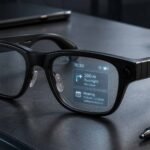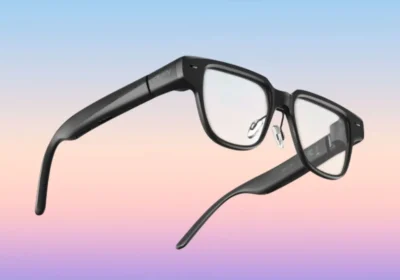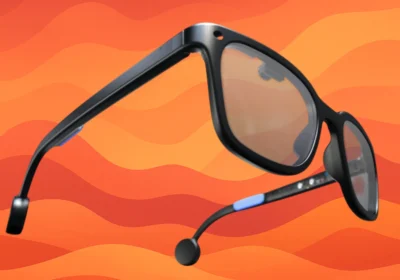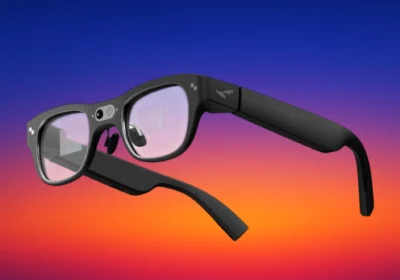
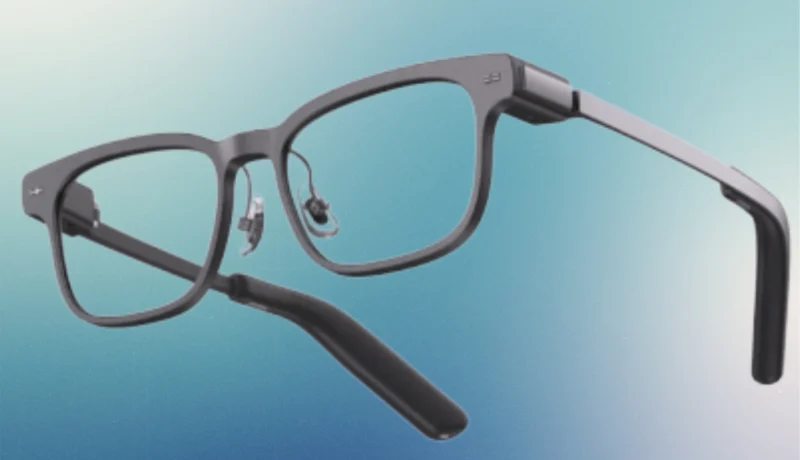

Reading live subtitles mid-conversation, following walking directions without looking down, receiving AI answers to spoken questions, all of this happens in the wearer’s line of sight with MemoMind One. Unlike most AI glasses that place a front-facing camera at the core of the experience, MemoMind One centers everything on a Micro-LED display. Translation, transcription, navigation, and on-demand AI queries all surface visually, without a lens pointed at anyone nearby. Support for ZEISS prescription lenses and three available frame styles keeps the overall look grounded in everyday eyewear.
Table Of Content
Read on for a full look at what MemoMind One offers, what it costs, and whether it fits the way you actually live.
Design Details and Lens Options
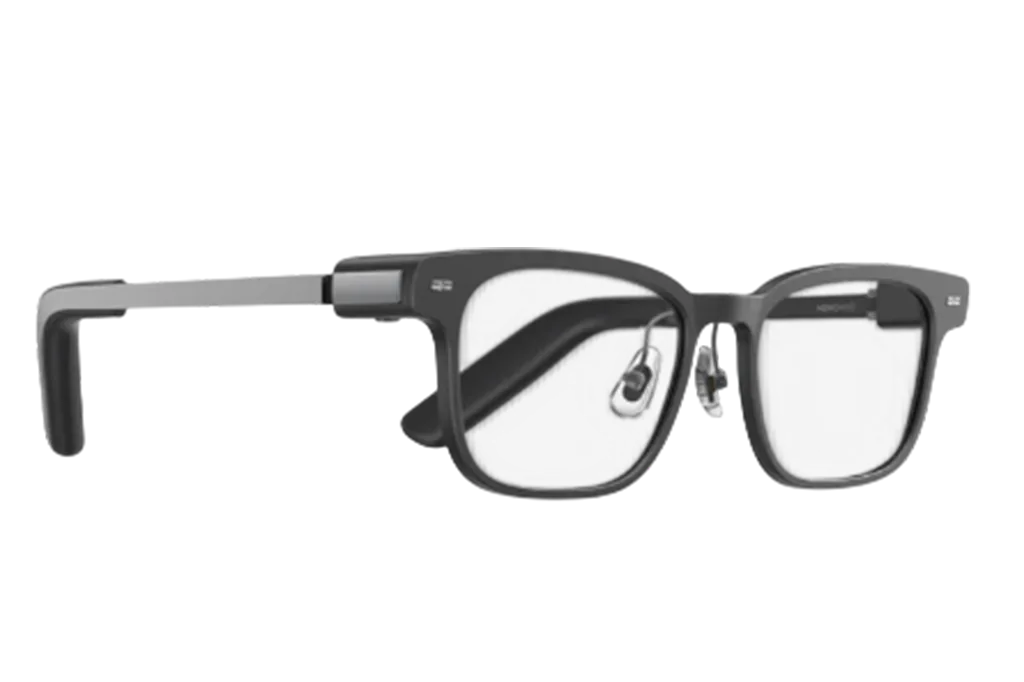
MemoMind One weighs 46.6 grams, about the same as regular prescription glasses. The frame has a natural 175-degree curve and flexible hinges. The main electronics are hidden behind the ears for comfort and balance. Choose from three frame styles: Nomad, Gotham, and Archive, made from beta-titanium, magnesium-aluminum, and acetate. Each style uses premium materials for a refined look. For vision correction, MemoMind One fits ZEISS XRRX prescription lenses available only in the United States.
Visual Experience and Display Quality
MemoMind One uses dual Micro-LED projectors to present information directly in the wearer’s field of view. The display reaches 2,000 nits of brightness, keeping content visible even in direct sunlight. Users can adjust where the content appears, selecting a distance between one and five meters ahead. They can also control height, depth, and brightness. The display offers clear visibility and privacy through AR optical techniques, making the content visible only to the wearer in public settings.
Light is directed downward through a transparent grating, reducing sideways leakage and keeping the display visible only to the wearer. Navigation prompts, AI responses, captions, and notifications remain private so bystanders cannot see them.
AI Features in Daily Use
MemoMind One brings together a suite of AI-powered functions to support both communication and access to information through its display and audio capabilities.
The Memo AI assistant can process spoken questions, providing answers and visual prompts directly in the user’s view for hands-free convenience.
For language support, AI Translator offers real-time interpretation in over 26 languages. Users can choose between Listen-In mode for passive translation or Dialog mode for interactive conversations.
With AI Recorder, users can capture audio during activities such as meetings or lectures and receive an organized summary shortly afterward. Audio can be recorded using either the glasses themselves or an accompanying phone.
AI Teleprompter lets users view saved notes, schedules, or other content on the display, making it possible to review information as needed.
AI Captions presents live subtitles within the wearer’s line of sight. Instant Q&A and Smart Listen are the available modes for different subtitle needs.
Navigation and Productivity in Daily Use
Maps give turn-by-turn walking and cycling directions right in front of your eyes, so you don’t have to look at another device. You can also quickly find your favorite places from a simple menu of saved spots.
The Calendar feature puts your appointments, tasks, and reminders in one place, with three easy views: Schedule, To-Do, and Suggested. These help you keep organized and focus on what matters each day.
Idea Notes lets you jot down thoughts as they come to mind. Over time, similar notes are grouped by topic, so it’s easier to review and manage your ideas.
Support for Third-Party Development
MemoMind One supports third-party development and software integrations. OpenClaw is included, so developers are able to create new applications and connect the glasses to other platforms.
Privacy Without a Camera
MemoMind One doesn’t have a camera and gives you easy ways to control audio recordings. Audio is only recorded when you decide to start it. You can set your own wake words, delete saved recordings, and mute audio instantly with a tap.
How the Battery Holds Up
MemoMind One can be used for over 16 hours on a single charge. The battery lasts all day without recharging.
App Features and Personalization
The MemoMind companion app is available for both iOS and Android devices. Within the glasses, users can personalize their dashboard by choosing from a variety of widgets, including time, weather, calendar, stocks, upcoming meetings, and music. Notification settings are fully adjustable, ensuring only selected alerts appear in the display. Looking up opens the dashboard, while shifting your gaze forward returns to the main view.
The app provides an interface similar to the glasses’ and expands access to additional features, including dashboard arrangement, notification controls, browsing recordings and stored information, audio settings, and firmware updates. Users can interact with MemoMind One using voice commands, gesture recognition, a physical button, double-click shortcuts, and customizable button assignments.
When Can You Buy It?
Early access reservations are open now. A $30 deposit holds your spot and qualifies you for VIP pricing when MemoMind One launches; however, this is a reservation, not a product purchase. Prescription ZEISS XRRX lens availability is limited to the United States. Watch the MemoMind website and Kickstarter page for updates.
The Bigger Picture
AI glasses are still working out what they want to be, and every product decision made right now quietly shapes where the category ends up. MemoMind One bets on display instead of camera, on audio interaction rather than visual capture, and on user-controlled privacy over passive data collection. These are coherent priorities, even if they come with trade-offs. Whether they add up to something people actually want to wear every day is a question that only real-world use, not early enthusiasm, can answer.