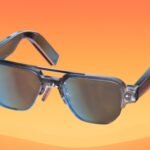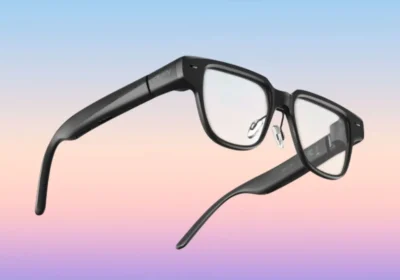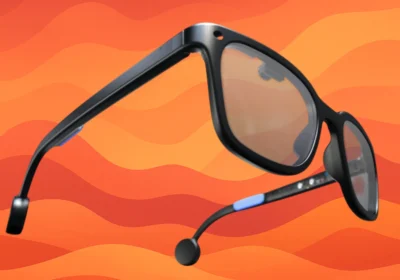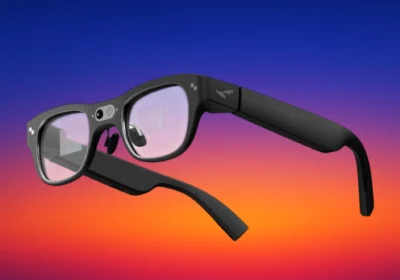

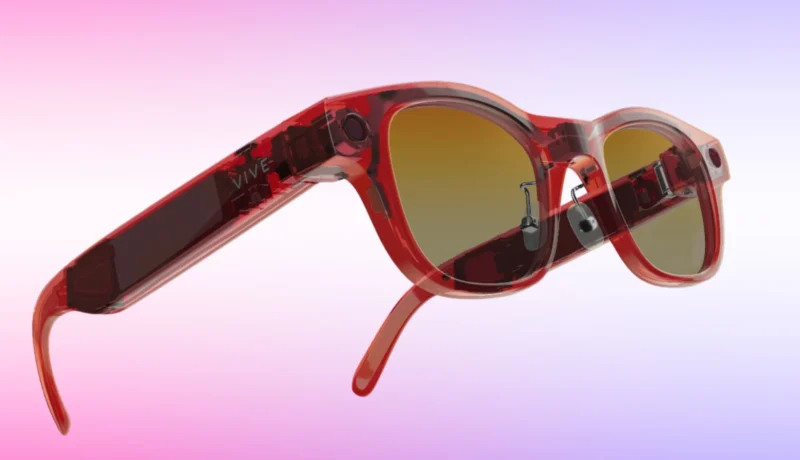

Nearly 60% of people check their phones over 100 times a day, a habit that distracts from the world around them. HTC’s VIVE Eagle offers AI-powered glasses that keep useful information in view without constant screen time. The frame weighs under 49 grams and uses Qualcomm’s Snapdragon AR1 Gen 1 chipset. Features include a 12MP camera, open-ear speakers, real-time image translation, and memory recall. Comfortable for all-day use, the VIVE Eagle manages tasks like navigation, translation, and audio with a hands-free experience that fits naturally within daily life.
Table Of Content
- Frame Design and Lens Options
- Visual Capture and Camera Features
- What the AI Assistant Actually Does
- Audio and Microphone Configuration
- Connectivity and App Requirements
- Data Privacy and Security Certifications
- Battery Performance and Charging Details
- VIVE Eagle Specs Overview
- On Sale Now, But Not Everywhere Yet
Below, we cover everything VIVE Eagle offers, from core features and design to specs and availability, to help you decide if it is worth your attention.
Frame Design and Lens Options
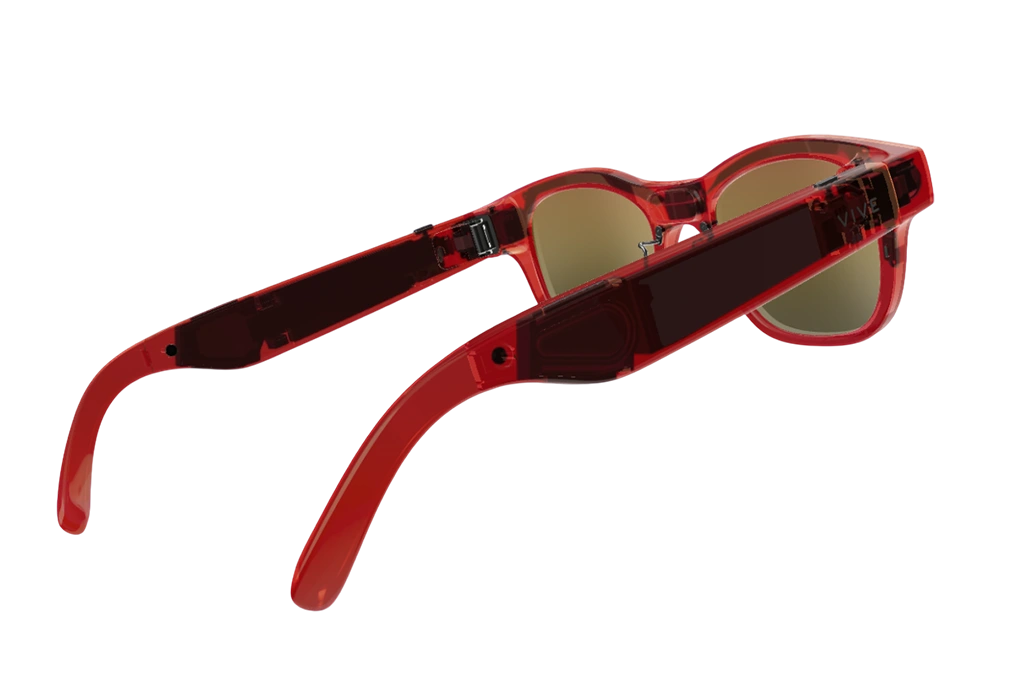
The VIVE Eagle comes in two frame sizes, M and L. The M frame weighs 48.8 grams with lenses and 42.8 grams without. The L frame weighs 51.5 grams with lenses and 45.5 grams without. Both sizes include adjustable nose pads to fit a range of face shapes. ZEISS lenses are rated UV400 for sun protection. The glasses are sold with sunlenses only. The M size comes in Black, Berry, Coffee, and Grey, while the L size is available in Black and Grey.
Visual Capture and Camera Features
A 12-megapixel ultra-wide camera supports still HD photography and video recording. Photos are shot at 3024 x 4032 pixels, and video records at 1512 x 2016 pixels at 30 frames per second. An AI-driven horizon alignment feature helps keep shots level during capture. Privacy indicators include a capture LED that signals when recording is active. The camera automatically deactivates when the glasses are not worn or when the LED is covered. These measures reduce accidental recording and improve transparency in public settings.
What the AI Assistant Actually Does
The VIVE Eagle runs on two AI models: Google Gemini and OpenAI GPT, with GPT currently in beta. A dedicated button on the frame activates the assistant. Pointing the camera at foreign-language text on a menu, road sign, or any printed material returns a translation on the spot. The same function works for cross-language messaging while traveling. Processing happens through a paired phone.
The VIVE AI Plus assistant handles memory tasks, letting users match names to faces, build lists, and tag locations, such as parking spots, for later recall. The assistant also responds to voice queries, surfaces trending news, and suggests recipes. For travel, the glasses pull in local transport details, weather forecasts, local news, hands-free visual capture, and information about surroundings.
Audio and Microphone Configuration
The VIVE Eagle has two bass-enhanced open-ear stereo speakers with advanced audio tuning, delivering crisp spatial sound with reduced sound leakage. Voice input is processed by a beamforming microphone array consisting of one directional microphone and three omnidirectional microphones. The frame also includes a touchpad, a capture button, and a power/AI button.
Connectivity and App Requirements
The VIVE Eagle connects via Wi-Fi 6E and Bluetooth 5.3. Setting up the glasses requires downloading the VIVE Connect app from the Google Play Store or the App Store. The app runs on iOS 17.6 and above, and Android 10 and above. Music playback may need an active subscription to a supported music service.
Data Privacy and Security Certifications
Data passing through VIVE AI is protected in transit and at rest through encryption and de-identification measures that reduce the risk of identification. The platform carries both ISO 27001 and ISO 27701 certifications for comprehensive personal data protection. No user data is sold or used for training purposes.
Battery Performance and Charging Details
The VIVE Eagle runs on a 235mAh battery, lasting over 36 hours on standby. Continuous music playback reaches up to 4.5 hours, and voice calls run for over 3 hours per charge. The device charges through a magnetic cable with fast charge support. From a low charge, the battery reaches 50 percent in 10 minutes and 80 percent in 23 minutes.
VIVE Eagle Specs Overview
| Specification | Details |
| Chipset | Qualcomm Snapdragon AR1 Gen 1 |
| Camera | 12MP ultra-wide; Photo: 3024 x 4032px; Video: 1512 x 2016 @ 30fps |
| AI Models | Google Gemini; OpenAI GPT (beta) |
| Battery | 235mAh; 36+ hrs standby; 4.5 hrs music; 3+ hrs calls |
| Charging | Magnetic cable; 0–50% in 10 min; 0–80% in 23 min |
| Connectivity | Wi-Fi 6E, Bluetooth 5.3 |
| Weight | M: 48.8g (with lens), 42.8g (without) | L: 51.5g (with lens), 45.5g (without) |
| Lenses | ZEISS UV400 sunlenses |
| Companion App | VIVE Connect (iOS 17.6+, Android 10+) |
On Sale Now, But Not Everywhere Yet
The VIVE Eagle is currently available in Taiwan, sold with sunlenses only, and offered in sizes M and L. HTC has not announced pricing or a release timeline for other regions. For the most current availability information, check the official VIVE Eagle page.
The Details Are in, the Rest is Up to Real Use
The smart glasses category has had a complicated history, with many attempts falling short of what was outlined. The VIVE Eagle covers translation, memory recall, audio, and photography within a single lightweight frame. Whether those capabilities hold together in real conditions remains to be seen. As the category develops further, how well the VIVE Eagle fits into everyday life will depend on the person wearing it and what they genuinely need it to do.