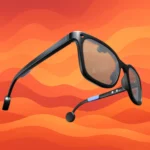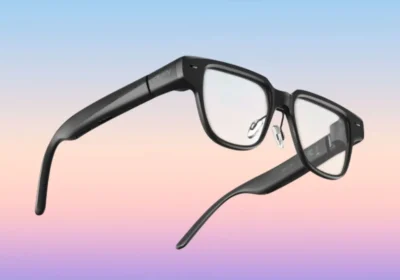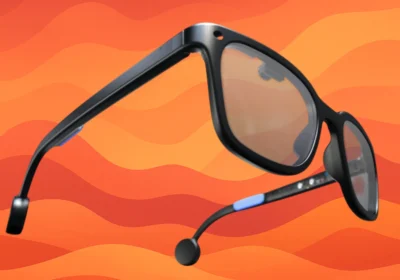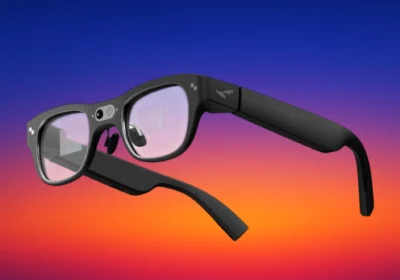


Smart glasses shipments jumped nearly 11x between 2024 and 2025, but most devices target tech enthusiasts, fitness trackers, and AR early adopters. People with hearing loss have been overlooked in the rush to mainstream adoption. Captify Pro is captioning glasses built for people who are deaf or hard of hearing, offering captions directly in the wearer’s line of sight. The glasses feature two beamforming microphones, binocular diffractive waveguide displays in the lenses, and translation support for over 80 languages. Weighing 37 grams, the frame looks and feels like regular eyeglasses. Transcriptions run locally on a paired phone and are free with no subscription.
Table Of Content
Keep reading to learn more about Captify Pro’s display, audio features, transcription, frame design, battery life, price, and other technical details.
How Do the Captify Pro Smart Glasses Display Captions?
Captify Pro uses a binocular diffractive waveguide display that projects digital content onto the lenses. The dual-eye display provides a natural, balanced visual experience, with captions appearing across both lenses at once, so there is no squinting or strain from reading on one side. Users can turn off one display if they wish. Captions appear in high-contrast monochrome mode for clear, readable text.
The display has a resolution of 640×480, a 30-degree field of view, and a peak brightness of 1,500 nits. Users can choose between three font sizes (Regular, Large, and Extra-Large) and can reposition captions to appear at the top, bottom, or sides of their view.
Audio Capture and Noise Filtering
Audio capture in Captify Pro relies on two onboard beamforming microphones. Beamforming is a signal processing technique where microphones work together to isolate sounds from a specific direction, in this case the person speaking in front of the wearer, while reducing sounds from other directions. The glasses also include directional microphones, which improve speech understanding in noisy conditions. Noise cancellation helps capture conversations more clearly in loud environments such as restaurants or public events.
The frame includes stereo directional speakers for audio feedback when needed. Beyond speech, Captify Pro has a non-speech sound detection feature that alerts the wearer to environmental sounds like laughter, applause, or music, adding situational awareness.
Transcription and Translation Features
Captify Pro picks up spoken words and displays the transcribed text directly on the lenses, so the wearer can follow what is being said without looking away from the speaker. Transcriptions are processed locally on the paired phone and are free with no subscription or recurring charges.
Beyond transcription, Captify Pro offers live translation. Spoken words in one language can appear as text in another language on the lenses. Captify Pro runs on Microsoft’s language recognition model for speech transcription and translation. The glasses currently support 30+ languages, with 80+ planned. No internet connection is required during use, as all processing happens locally through the companion app.
Frame Design and Lens Options
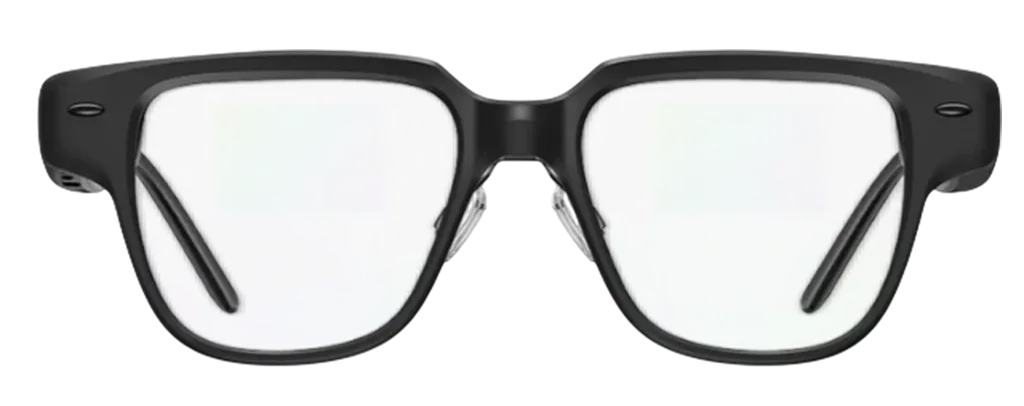
Weighing 37 grams, Captify Pro is comparable to a standard pair of lightweight eyeglasses. The frame measures 145mm wide with a temple length of 128mm. The ergonomic build includes an adjustable nosebridge in three sizes, accommodating a range of facial structures. The temples are made of nylon, the hinge is stainless steel, and the display is impact-resistant glass. An IPX4 rating means the glasses can handle sweat and light rain.
For wearers who require vision correction, Captify Pro accepts single vision lenses, reading lenses, progressive lenses, and bifocal lenses. Lenses are made from polycarbonate with an anti-scratch coating, and a blue light filtering option is available. Standard clear lenses are offered for users who do not need vision correction.
Controls, Battery, and Connectivity
Captions are turned on or off with a simple tap on the frame, with no menus or extra steps required. Battery performance is 4 hours of continuous captioning and 20 hours on standby, based on a 180 mAh capacity. A full charge takes about 40 minutes, so a short break during the day is enough to restore a full day of use.
The glasses connect using Bluetooth 5.3 and have a range of up to 10 meters, or about 30 feet. They are compatible with iOS 16 and later, and Android 12 and later.
Captify App
The Captify companion app handles configuration settings, including transcription language, translation language, and font size adjustments for readability. The app also stores a log of past captioned conversations for later review. No internet connection is needed during captioning use, as the app processes speech locally on the device.
Which Languages Are in, and What’s Next
Captify Pro now supports over 30 languages, such as Afrikaans, Bosnian, Cantonese, Chinese (Simplified and Traditional), Croatian, Czech, Danish, Dutch, English, Estonian, Filipino, Finnish, French, German, Hungarian, Icelandic, Indonesian, Irish, Italian, Japanese, Latvian, Lithuanian, Malay, Norwegian, Polish, Portuguese, Romanian, Slovak, Slovenian, Somali, Spanish, Swahili, Swedish, Turkish, Vietnamese, and Zulu. More languages are coming soon, including Arabic, Gujarati, Hebrew, Hindi, Kannada, Korean, Malayalam, Marathi, Persian, Punjabi, Sinhala, Tamil, Telugu, Thai, and Urdu, bringing the total to over 80 languages.
For the People Who Read the Back of the Box
| Display | Binocular diffractive waveguide, FOV 30 degrees, 1,500 nits brightness, 640×480 resolution |
| Audio | Dual beamforming microphones, stereo directional speakers |
| Battery | 180 mAh, 20 hrs standby, 4 hrs continuous captioning, 40 min charge time |
| Weight | 37 grams (1.3 oz) |
| Frame | Width 145mm, Temple length 128mm |
| Connectivity | Bluetooth 5.3, 10m / 30ft range, iOS v16+ and Android 12+ |
| Durability | IPX4, sweat and rain resistant |
| Materials | Impact-resistant glass display, polycarbonate lenses, nylon temples, stainless steel hinge |
| Languages | 30+ supported now, 80+ including coming soon |
So, How Much Does It Cost?
Captify Pro is available directly through the company’s Captify website at $799. At checkout, buyers choose their lens type from non-prescription, single-vision, reading, progressive, and bifocal options.
The Bigger Picture for Accessible Tech
Captify Pro takes a focused approach to an accessibility challenge. Rather than adding broad consumer features, the glasses concentrate on making spoken conversation readable for people who are deaf or hard of hearing. Prescription lenses fit right in, the beamforming microphones zero in on whoever is speaking in front of the wearer, and non-speech sound detection keeps the wearer aware of what is happening around them. With 30+ languages supported now and 80+ planned, free transcription, and no subscription fees, the glass addresses a gap that mainstream smart glasses have left unfilled. Continued development in display clarity, language recognition, and hardware will likely expand the role of smart glasses in communication and accessibility.