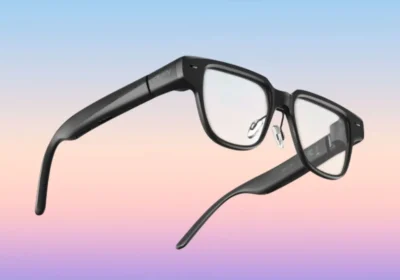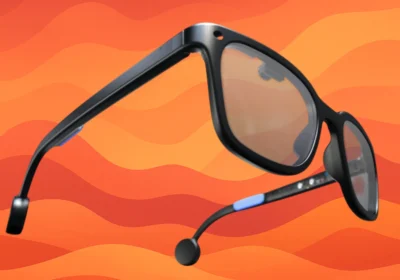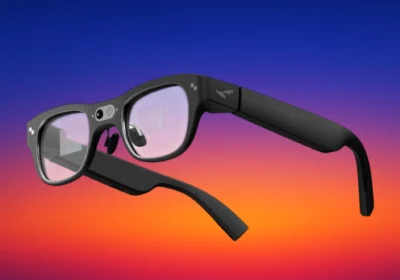

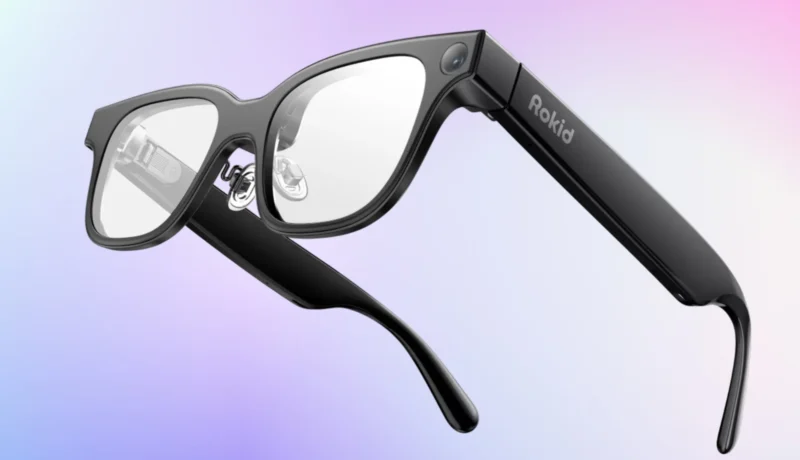

With smart glasses shipments soaring more than tenfold in a year, the race to build smart glasses worth wearing every day has never been more competitive. Advances in artificial intelligence and augmented reality have quietly been converging toward one inevitable question: what happens when all of that capability fits inside a regular glasses frame? Rokid’s AI & AR glasses take a serious shot at answering it, weaving together a visual display, a 12MP high-definition camera, voice-activated AI, and real-time language translation into a frame made from titanium alloy and TR90 high-polymer plastic, with room for prescription lenses. Getting this much capability into something designed for all-day wear has stumped the industry for years, and Rokid’s approach to that challenge is worth understanding.
Table Of Content
- Frame Design, Materials, and Lens Options
- What the Display Shows and How It Works
- Real-Time Translation and Live Subtitles in the Lens
- What the AI Assistant Can Do
- How the Navigation Feature Works
- A Look at the Camera and Imaging Capabilities
- Open-Ear Speakers and Microphone
- Battery and Rechargeable Case
- What It Costs and How to Order
Below, we break down the design, features, and specs to see how well Rokid has answered that challenge.
Frame Design, Materials, and Lens Options
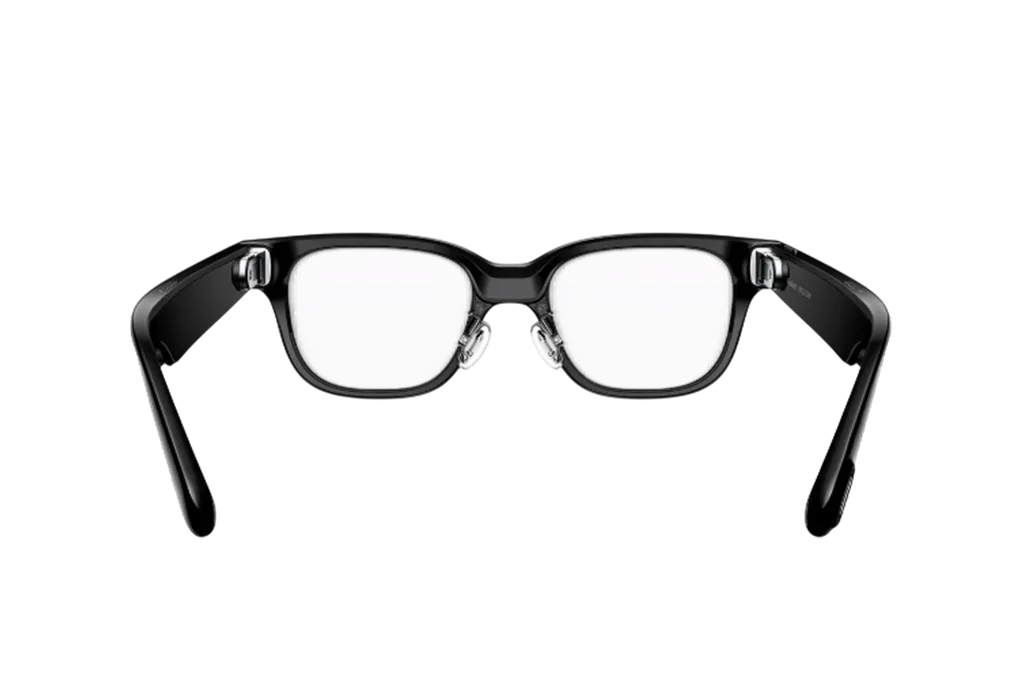
Rokid glasses frames are made from TR90, a high-polymer plastic that is lighter in weight and less prone to deformation. The frame measures 155mm x 49mm x 44mm and has a total weight of 49 grams.
The hinge is made from titanium alloy, offering high strength, a lightweight build, and resistance to wear and corrosion. These properties matter for a hinge that opens and closes repeatedly during daily use.
The glasses are compatible with prescription and astigmatism lenses. The clip-on design makes lens installation and replacement simple.
What the Display Shows and How It Works
Rokid glasses use a dual-eye monochrome display to deliver crystal-clear visuals, with instant subtitles directly in the lenses. The display is intended for quick information capture, delivering subtitles, navigation directions, and other overlay content directly in the wearer’s line of sight.
The Micro-LED engine is 0.15cc in volume, the smallest of its type. It reaches up to 1,500 nits brightness with 10-level dimming, so subtitles stay sharp and readable indoors or in bright sunlight.
The display resolution is 480 x 640 pixels, and the field of view is 30 degrees. The eye relief distance is 18mm, the space between the lens surface and the eye where the full display image is visible.
Real-Time Translation and Live Subtitles in the Lens
Rokid glasses support real-time language translation across 89 languages in online mode and 6 languages in offline mode, powered by Rokid’s large language model. Translation output is delivered with under one second of latency. Translated words appear as subtitles directly in the wearer’s line of sight, and an optional voice broadcast can deliver the same translation audibly through the speakers.
Two-way translation is available through the Hi Rokid companion app, which translates speech from both sides of a conversation. The app pairs with the glasses to handle face-to-face exchanges between speakers of different languages, with translations appearing in the lenses under one second of latency.
Text translation is also supported. The camera reads signs, menus, and other text in real time while traveling, with translated output appearing in the lenses.
What the AI Assistant Can Do
The glasses include a GPT-5 model and enable a range of AI-powered features. The AI assistant is activated by saying “Hi Rokid.” Users can then ask questions, take a photo to identify what they are seeing, and follow up with additional questions in the same interaction.
A smart captioning feature displays text in the lenses as the wearer speaks, keeping pace with the natural speech rhythm, including pauses. Intended for anyone who speaks in front of others, from public speakers to content creators to everyday users.
Audio transcription is a separate feature that covers two functions: recording ideas and inspiration through voice-to-text at any time, and transcribing meeting audio with speaker identification and intelligent summaries.
How the Navigation Feature Works
The Rokid AI Glasses work with Google Maps to provide hands-free directions for commuting and travel. Saying “Hi Rokid, get directions to” followed by a destination starts real-time AR navigation instantly. A subscription is needed to unlock the full navigation experience.
A Look at the Camera and Imaging Capabilities
Rokid AI&AR glasses include a 12-megapixel Sony IMX681 point-of-view (POV) camera for first-person filming. The camera has an F2.25 aperture, a diagonal field of view of 109 degrees, horizontal 77 degrees, and vertical 94 degrees. Autofocus is not supported. The focal length is 1.9 meters, and the depth of field covers 34 centimeters to infinity. The camera is angled 3 degrees inward.
Still photos capture up to 12MP (3024 x 4032 pixels) and video up to 1680P. Supported aspect ratios are 3:4 native, 9:16 vertical, and 4:3 landscape. HDR processing, noise reduction, and stabilization apply automatically, and the camera adapts to different scenes with intelligent optimization.
Low-Light HDR keeps photos and videos clear in challenging conditions, whether inside a dim restaurant, walking city streets at night, or on an evening stroll. Capture is hands-free via voice commands like “Hi Rokid, take a photo” or “Hi Rokid, record a video,” or manual with a dedicated button on the frame.
Open-Ear Speakers and Microphone
Rokid glasses use dual AAC near-ear directional speakers paired with Rokid’s proprietary audio system. Together, these enhance audio privacy for a more discreet call experience. The audio system supports three presets, Rhythm, Clarity, and Podcast, each tailored for different listening scenarios.
On the microphone front, a four-mic array handles voice capture, with built-in noise reduction that tackles wind interference and delivers cleaner, more reliable voice pickup during calls or commands.
Battery and Rechargeable Case
The glasses have a 210 mAh battery and support all-day use on a single charge with moderate use. Expect about 6 hours of music playback and up to 4 hours of Bluetooth calls.
The 3,000mAh rechargeable case extends usage beyond the internal battery. The glasses support fast charging and can be used while plugged in, so running out of battery mid-day is rarely a concern.
What It Costs and How to Order
The Rokid AI & AR Glasses cost $599 and can be bought from Rokid’s official website. After a successful Kickstarter campaign, the device is now available to the public. For the latest updates on where you can buy them, shipping, and product news, check Rokid’s website or their Kickstarter page.
Wrapping It Up
Rokid’s AI & AR glasses cover a lot of ground in a single frame, pulling together translation, navigation, photography, and AI assistance into something built for everyday wear. Whether every feature performs as well in daily use as it does on paper is a question only extended real-world testing can answer. What’s clear is that the gap between ambitious AR products and something most people would actually choose to wear daily is narrowing. Rokid has made a credible attempt at closing it, and for anyone watching where smart glasses are headed, that alone makes these worth paying attention to.